
✏️ Updated March 2026
Rent to Rent HMO vs Serviced Accommodation:
Which Makes More Money?
A complete, honest comparison of the two most popular rent to rent strategies — HMO and serviced accommodation — covering income, setup costs, management, risk and which is right for your market.
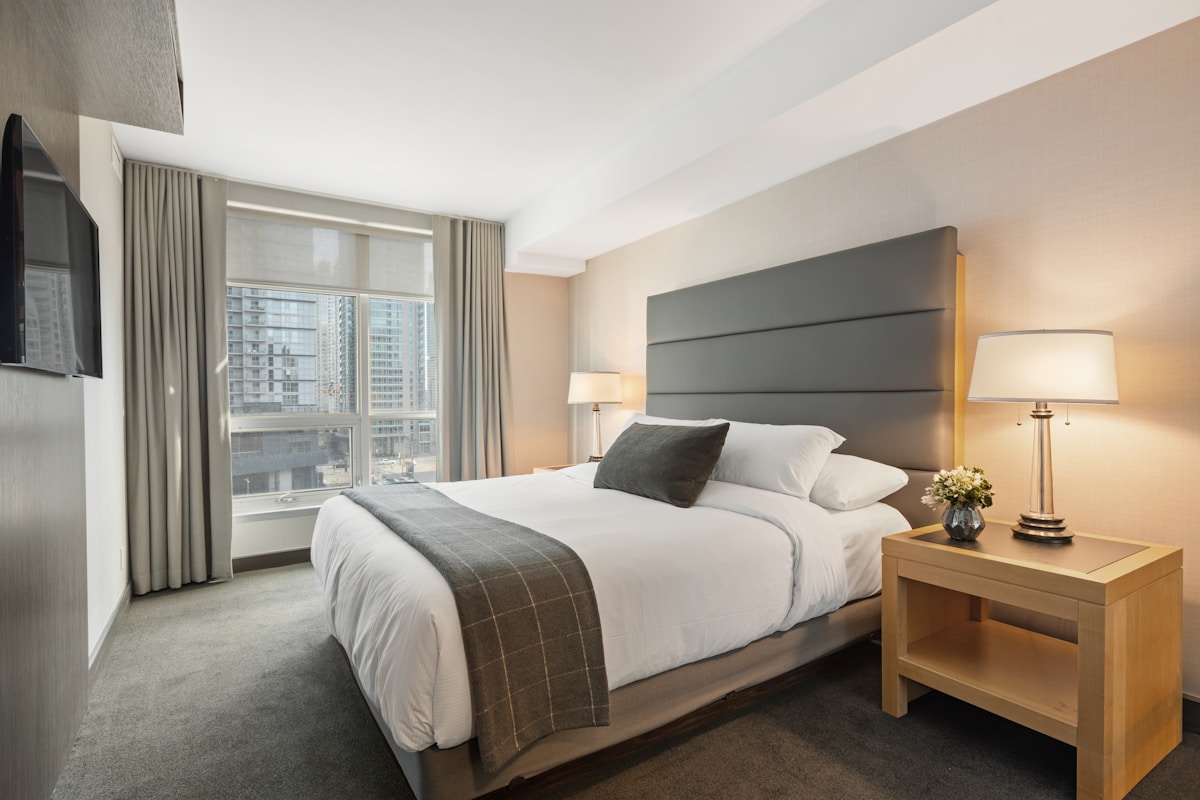
If you have decided to pursue rent to rent, the next question is which model to use. The two most discussed options are HMO (letting rooms individually to multiple tenants) and serviced accommodation (short-term letting on platforms like Airbnb and Booking.com).
Both work. Both can be highly profitable. But they suit very different markets, skill sets and risk appetites. This guide gives you the complete picture.
What This Guide Covers
How Each Model Works
🛏️ Rent to Rent HMO
- Rent rooms individually to separate tenants
- Tenants typically stay 6–24 months
- Assured Shorthold Tenancies with each occupant
- Bills included in room rent
- Income is consistent and predictable
- HMO licence required (usually)
- Compliance: fire safety, EPC, gas, EICR
- Rooms listed on SpareRoom / Rightmove
🏨 Rent to Rent SA (Serviced Accommodation)
- Let the whole property on a short-stay basis
- Guests typically stay 1–28 nights
- No AST — booking agreements used
- All bills, linen, toiletries included
- Income varies by season and occupancy
- No HMO licence (short-term guests)
- Compliance: gas, EICR, fire safety
- Listed on Airbnb, Booking.com, direct
Income Comparison — Real Numbers
Using a 3-bedroom flat in Manchester city centre as the example property, with a landlord rent of £1,100/month:
🛏️ As HMO (3 rooms × £600/month)
🏨 As SA (£120/night avg, 80% occupancy)
Income Potential Range — UK Market
| Metric | HMO Rent to Rent | SA Rent to Rent |
|---|---|---|
| Typical monthly profit | £500–£2,000 | £800–£5,000+ |
| Best case scenario | £2,000/month (5-bed, high-demand city) | £5,000+/month (tourist city, high season) |
| Worst case scenario | £300/month (tight margins) | Loss-making (low occupancy) |
| Income consistency | Very consistent | Variable (seasonal) |
| Income predictability | Highly predictable | Harder to forecast |
Setup Costs Compared
| Cost Item | HMO | SA |
|---|---|---|
| Furnishing standard | Good (functional) | Premium (hotel quality) |
| Furnishing cost estimate | £2,500–£6,000 | £5,000–£15,000 |
| Photography (professional) | Optional | Essential |
| Smart locks / keybox | Optional | Required (£150–£400) |
| Welcome packs / consumables | None | Ongoing cost |
| Linen service setup | None | £300–£600 |
| Listing setup time | Low | High (photos, copy, pricing) |
| Total setup cost estimate | £7k–£17k | £10k–£25k |
Management Demands Compared
| Task | HMO | SA |
|---|---|---|
| Guest/tenant communications | Low (stable tenants) | High (new guests constantly) |
| Turnovers per month | 1–2 (occasional) | 8–25 (every few days) |
| Cleaning frequency | Monthly/quarterly deep clean | After every stay |
| Pricing management | Set and forget | Dynamic pricing ongoing |
| Platform management | SpareRoom (simple) | Airbnb, Booking.com (complex) |
| Can be outsourced? | Yes — property manager | Yes — SA co-host (costly) |
| Passive when systemised? | Yes (with PM) | Partially (with co-host) |
Risk and Stability
| Risk Factor | HMO | SA |
|---|---|---|
| Void risk | Low — stable tenants | Higher — seasonal gaps |
| Income predictability | High | Lower |
| Damage risk | Moderate | Higher (short-stay guests) |
| Council restrictions | HMO licensing complexity | SA licensing emerging (Scotland) |
| Lease restrictions | Less common | Common in leasehold flats |
| Platform dependency | None | Airbnb algorithm dependency |
| Local competition | Growing in some areas | High in tourist cities |
Which Is Best For Your Market?
🛏️ HMO Works Best In…
- University towns and cities
- Commuter belt towns near major employment
- Areas with strong young professional demand
- Cities with large NHS or public sector workforce
- Areas where SA is restricted or not viable
- Markets where you want predictable, low-effort income
- Any market where room demand outstrips supply
🏨 SA Works Best In…
- City centres with strong leisure and business tourism
- Near major hospitals (NHS staff, travelling nurses)
- Near large corporate employers or contractors
- Coastal and rural tourist destinations
- Near conference centres and event venues
- Areas with consistent 70%+ short-stay occupancy
- Where corporate demand supplements leisure bookings
Legal Considerations Specific to SA
Serviced accommodation via rent to rent has some additional legal checks beyond standard R2R:
- Lease restrictions. Leasehold properties (most flats) increasingly contain clauses prohibiting short-term letting. Check the headlease carefully before any SA deal on a leasehold property — this is the most common legal problem SA operators encounter.
- London 90-day rule. In Greater London, entire-property short-term letting is limited to 90 nights per calendar year without planning permission. Track your nights carefully.
- SA licensing (Scotland). Scotland introduced mandatory short-term let licensing in 2023. All SA operators in Scotland must hold a licence. Similar schemes are under consideration in other parts of the UK.
- Planning permission. In some areas, operating SA may require planning permission for a change of use. Check with the local planning authority before committing to a deal.
- Mortgage consent. SA use must be specifically permitted by the landlord’s mortgage — standard buy-to-let mortgages often prohibit short-term letting. The landlord must obtain consent from their lender.
The Verdict — HMO or SA?
Our Assessment
For most rent to rent beginners, HMO is the better starting point. It is more forgiving operationally, more consistent in income, easier to systemise, and applicable to a broader range of UK locations. The compliance requirements (HMO licensing) are complex but well-understood. Once you have mastered HMO operations, scaling is relatively straightforward. For more detail, see our complete beginner’s guide to rent to rent.
Serviced accommodation offers higher income ceiling and is the right strategy for operators in strong SA markets — particularly city centres and areas with consistent corporate demand. But it demands more capital, more operational effort, and more location-specific market knowledge. The income is higher when it works — and significantly lower when it does not.
The smartest approach for many operators is to start with HMO for consistent income, then add SA deals selectively where the location and numbers are compelling. Not one or the other — both, deployed where each performs best.
Understand the HMO model fully: Rent to Rent vs HMO Investing →
All the pros and cons: Rent to Rent Pros and Cons →
Frequently Asked Questions
Is serviced accommodation more profitable than HMO rent to rent?
SA has a higher income ceiling than HMO rent to rent, but only in the right location with strong occupancy. In a city centre tourist destination at 80%+ occupancy, SA comfortably outperforms HMO. In a suburban residential area with weak short-stay demand, HMO outperforms SA substantially. Location determines which strategy wins — there is no universal answer.
Can I do rent to rent serviced accommodation on any property?
No — there are several checks required before SA rent to rent is viable on any property. The landlord’s mortgage must permit SA use, the headlease (for leasehold properties) must not prohibit short-term letting, any local SA licensing requirements must be met, and London’s 90-day rule must be complied with where applicable. Always complete these checks before committing to an SA deal.
Is Airbnb rent to rent legal in the UK?
Yes — Airbnb rent to rent is legal when done correctly. You need explicit written permission to sublet the property on a short-term basis in your agreement, the landlord’s mortgage must permit SA use, and any leasehold restrictions must not prohibit short-term letting. In London, you must also comply with the 90-day per year rule for entire-property short-term lets. When all these conditions are met, it is a fully legal business model.
How much does it cost to set up a rent to rent serviced accommodation?
SA rent to rent typically costs £10,000–£25,000 to set up, depending on property size and the standard of furnishing required. The furnishing cost is significantly higher than HMO because SA guests expect hotel-quality presentation — premium beds, quality linen, smart TV, full kitchen equipment, professional photography, and welcome packs. This higher setup cost is offset by the higher income potential when occupancy is strong. For more detail, see how much you can realistically earn from rent to rent.
What is a corporate let and is it better than Airbnb for rent to rent?
A corporate let is where a property is let to a company for 1–12 months to house contractors, relocating staff, or NHS professionals. Corporate lets combine the higher nightly rates of SA with the stability and lower turnover of longer stays. Many experienced SA operators actively target corporate lets alongside leisure Airbnb bookings — corporate guests provide 4–8 week stays at premium rates, whilst Airbnb fills the gaps. This hybrid approach typically outperforms either strategy in isolation. For more detail, see SA pricing strategies.
Ready to Choose Your Rent to Rent Strategy?
Property Accelerator covers both HMO and SA rent to rent in full detail — so you can make the right choice for your market and get started with confidence.
Watch the Free Training Read the Full Guide →