

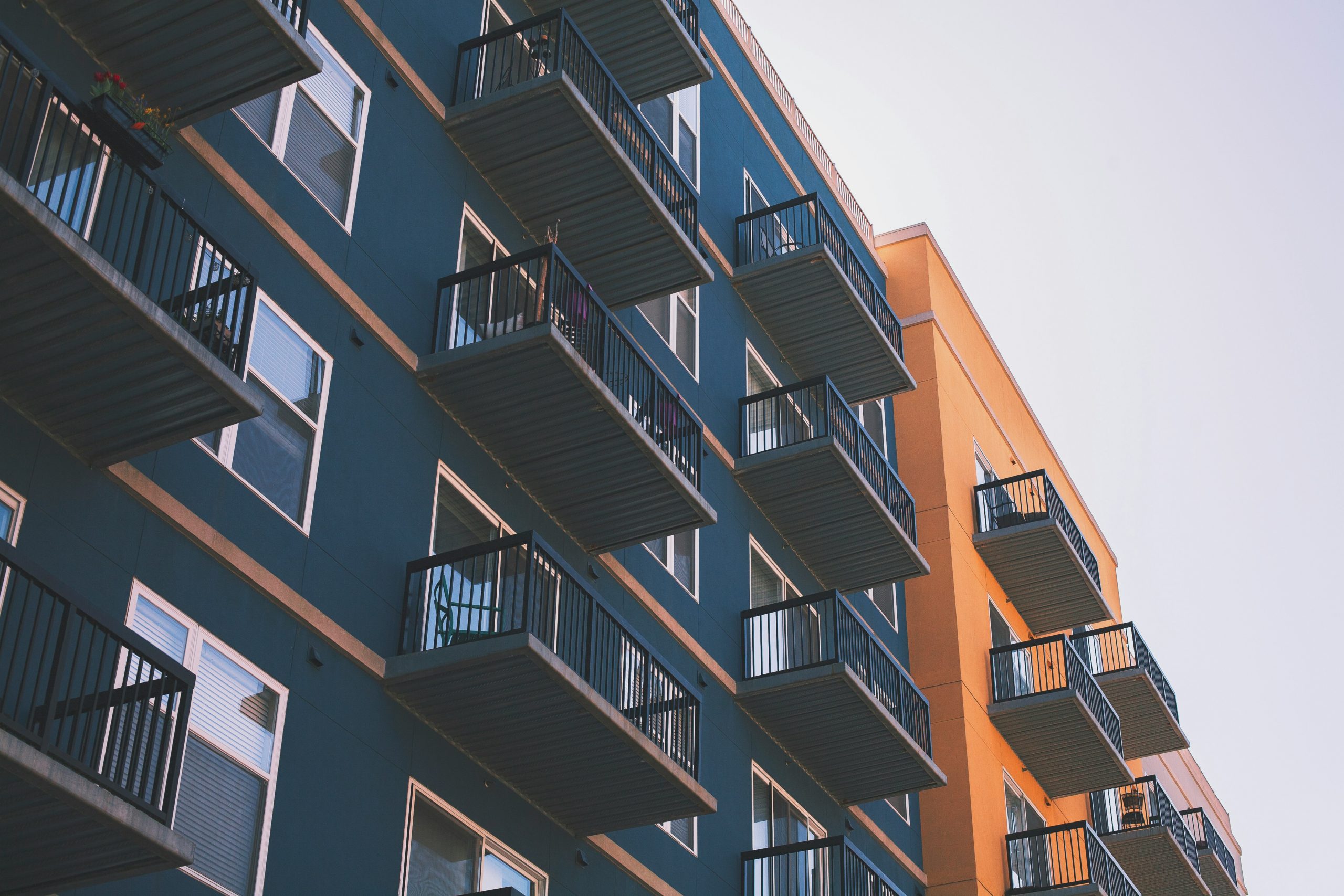
Almost four in ten London flats sold in 2025/26 after being owned for five to ten years fetched less than their previous purchase price. The findings come from a repeat-sales study by e.surv Chartered Surveyors, which compared property transaction records from HM Land Registry and Registers of Scotland.
The trend extends beyond the capital. Around a third of flats in the South East and East of England sold at a loss over the same ownership period. Houses performed considerably better, with fewer than 4% of properties selling below their previous purchase price in every region of England and Wales.
For landlords who purchased a buy-to-let flat between 2016 and 2021, these figures raise important questions about whether now is the right time to sell. Understanding the reasons behind falling flat values, the current position on leasehold reform and the costs involved in selling can help landlords make a more informed decision.
Key Facts About London Flat Prices
- 39.5% of London flats held for five to ten years and sold in 2025/26 fetched less than their previous purchase price, compared with 3.8% of houses.
- Across Great Britain, 26.7% of flats sold at a loss, compared with 2.2% of houses.
- In Scotland, the proportion of flats sold below their previous purchase price was 9.8%.
- e.surv reported an average Great Britain house price of £328,900 in September 2026, representing annual growth of 1.5%. London was the only region to record a fall, with prices down 2.3%.
- Official UK House Price Index figures showed that flats and maisonettes in England fell by 3.5% in the year to July 2026, while detached house prices increased by 1.4%.
- Selling a property at a loss means there is no Capital Gains Tax to pay on that transaction. Eligible losses can be carried forward to offset future capital gains, provided they are claimed within the applicable deadline.
How Flat Prices Compare Across the UK
e.surv examined properties sold during 2025/26 and compared their sale prices with the amounts recorded when they last changed ownership. The results were broken down by property type, region and length of ownership.
The figures below show the percentage of flats and houses owned for five to ten years that sold for less than their previous recorded price.
| Region | Flats sold at a loss | Houses sold at a loss |
| London | 39.5% | 3.8% |
| South East | 34.5% | 2.3% |
| East of England | 31.4% | 2.7% |
| Great Britain | 26.7% | 2.2% |
| West Midlands | 23.4% | 1.4% |
| East Midlands | 20.9% | 1.6% |
| South West | 19.5% | 1.9% |
| North East | 19.5% | 2.5% |
| Yorkshire | 19.1% | 1.7% |
| North West | 16.3% | 1.5% |
| Wales | 14.0% | 1.8% |
| Scotland | 9.8% | 4.6% |
Source: e.surv House Price Index, October 2026, based on analysis of HM Land Registry and Registers of Scotland records.
The figures reveal a consistent pattern: flats were more likely than houses to sell at a loss in every region. London and the South East recorded the largest differences, reflecting the importance of flats in these housing markets. According to e.surv, flats account for around three-fifths of homes in the capital.
Keeping a property for longer can reduce the likelihood of selling at a loss, but it does not eliminate the risk. Across Great Britain, 16.6% of flats held for ten to 15 years sold below their previous purchase price, compared with just 1.9% of houses.
Official UK House Price Index data also points to weakness in the flat market. In the year to July 2026, the average price of flats and maisonettes in England fell by 3.5% to £217,362, while detached homes increased by 1.4% to £474,626. London has experienced a prolonged decline, with Inner London among the areas most affected.
Why Flats Are Underperforming Houses
According to e.surv, the difference between flat and house price performance became more noticeable around 2017, following the Grenfell Tower fire. Since then, several issues have placed additional pressure on the flat market.
1. Building Safety Concerns
Increased scrutiny of cladding and fire safety has made some flats more difficult to sell or mortgage. Delays in obtaining the necessary building safety documents have also complicated transactions and created uncertainty for buyers.
2. Rising Service Charges and Ground Rent
Higher service charges and ground rent can make flats more expensive to own. For landlords, these costs reduce net rental returns and can make an investment less attractive to prospective buyers.
3. Leasehold Issues
Short lease terms, expensive ground rent arrangements and uncertainty surrounding future reforms can discourage buyers. These issues may also affect mortgage availability, narrowing the pool of potential purchasers.
4. Changing Housing Preferences
Flats are concentrated in London and other areas where house price growth has been relatively weak. The pandemic also shifted demand towards properties offering more indoor space and access to gardens, which benefited some types of houses over flats.
Scotland offers an interesting comparison. Its system for owning and managing flats differs from the leasehold system commonly used in England. Only 9.8% of Scottish flats held for five to ten years sold at a loss, while e.surv reported annual flat price growth of 7.2% in Scotland.
This does not prove that differences in property ownership arrangements are responsible for the gap. However, e.surv suggests that the way flats are owned and managed may be one factor influencing their performance.
Building safety protections are another important consideration for landlords in England. Some government protections against cladding remediation costs depend on whether a lease meets the definition of a qualifying lease. One of the tests concerns the number of UK properties owned on 14 February 2022, excluding the owner’s main home. The building must also be at least five storeys tall or 11 metres high.
Landlords with larger portfolios may not qualify for every protection. Buyers may therefore ask for evidence of the building’s safety status and any potential future liabilities before agreeing to purchase a flat.
Leasehold Reform: What Landlords Need to Know
Some landlords may be delaying a sale in the hope that leasehold reform will improve property values. However, it is important to distinguish between measures already in force and proposals that have yet to become law.
| Reform | Position as of 8 October 2026 |
| Removal of the two-year ownership requirement for lease extensions and freehold purchases | In force since 31 January 2025 |
| Changes intended to reduce the cost of lease extensions and freehold purchases, including removing marriage value for qualifying short leases | Not yet in force; implementation remains subject to the relevant process |
| Proposed £250 annual ground rent cap for certain older leases, reducing to a peppercorn after 40 years | Proposed in the draft Commonhold and Leasehold Reform Bill |
| Ending the sale of new flats as leasehold in favour of commonhold | Proposed, with details subject to consultation |
The proposed changes could eventually reduce some of the costs associated with owning a leasehold flat. However, landlords should avoid assuming that these savings will automatically increase their property’s value.
If a flat has a short lease or high ground rent, it is worth obtaining professional advice on the current position before deciding whether to sell, extend the lease or wait for further reforms.
What Selling a Flat Really Costs
The difference between a property’s purchase price and sale price does not tell the whole story. Stamp Duty, legal expenses, estate agent fees and qualifying improvement costs can significantly affect the final financial result.
The following examples illustrate how these expenses can change the outcome for landlords selling their properties.
Example 1: A London Flat Purchased in 2018
Priya bought a one-bedroom flat in east London for £450,000 in 2018. She paid £26,000 in Stamp Duty and £2,500 in legal and survey fees. She later spent £8,000 on qualifying improvements.
In 2026, she sold the property for £430,000. Her estate agent charged 1.8% of the sale price, including VAT, amounting to £7,740. She also paid £2,000 in legal fees.
Her financial position would be as follows:
| Item | Amount |
| Original purchase price | £450,000 |
| Stamp Duty | £26,000 |
| Purchase legal and survey fees | £2,500 |
| Qualifying improvements | £8,000 |
| Total purchase costs and improvements | £486,500 |
| Sale price | £430,000 |
| Selling fees | £9,740 |
| Net sale proceeds before mortgage repayment | £420,260 |
| Capital loss after eligible costs | £66,240 |
Although the flat’s market value fell by £20,000, the overall capital loss after eligible purchase, improvement and selling costs is £66,240.
There would be no Capital Gains Tax to pay on this loss-making sale. Priya could potentially use the allowable loss against future capital gains, subject to HMRC’s reporting requirements.
If she still owed £300,000 on her mortgage, she would receive approximately £120,260 after repaying the mortgage, before any other applicable charges.
However, rental income must also be considered when assessing the investment’s overall performance. If Priya had earned £60,000 in net rent over eight years, the combined result would be a £6,240 loss before income tax on the rental income, assuming the figures above and no other costs or returns.
Example 2: A South East Flat Purchased in 2016
Tom purchased a two-bedroom flat for £250,000 in 2016. He paid £10,000 in Stamp Duty and £2,000 in purchase fees.
Ten years later, he sold the flat for £275,000. His estate agent charged £4,950, while legal costs came to £1,500.
| Item | Amount |
| Original purchase price | £250,000 |
| Stamp Duty and purchase fees | £12,000 |
| Total acquisition cost | £262,000 |
| Sale price | £275,000 |
| Selling fees | £6,450 |
| Gain after eligible costs | £6,550 |
Although the property’s value increased by £25,000, the gain after eligible costs is only £6,550.
If the entire taxable gain fell within Tom’s available basic-rate band, and he had the full £3,000 annual Capital Gains Tax allowance available, his estimated tax bill at 18% would be £639. If the gain were taxed at 24%, the tax would be £852.
The actual tax payable depends on his wider taxable income, other gains and losses, and available allowances. This example shows why landlords should assess their net return rather than relying on headline house price growth.
How to Calculate Your Actual Profit or Loss
Before deciding to sell, landlords should calculate the financial outcome using the property’s full purchase and selling costs.
Start by gathering the original completion statement, Stamp Duty records, legal fees and invoices for any qualifying capital improvements. Obtain an up-to-date valuation based on comparable completed sales rather than asking prices alone.
Next, calculate the expected selling costs, including estate agent fees, legal expenses and any mortgage redemption charges. Compare the resulting net proceeds with the original acquisition costs.
It is also useful to consider the rental income received over the ownership period and the income that would be lost by selling. A property that has fallen in value may still have generated a worthwhile rental return, while a property that has increased in value may have delivered a disappointing overall return once costs are included.
A financial comparison should also consider the cost of keeping the flat, including mortgage payments, service charges, ground rent, repairs and potential major works.
Capital Gains Tax and Property Losses
For the 2026/27 tax year, the standard Capital Gains Tax rates for residential property gains are generally 18% for gains falling within the available basic-rate band and 24% for gains above it. The annual exempt amount is £3,000.
When calculating a gain, HMRC generally allows certain costs to be deducted, including Stamp Duty Land Tax, legal fees associated with buying or selling and qualifying improvement expenditure. Routine maintenance and repairs normally do not qualify as allowable capital improvement costs.
UK residents who owe Capital Gains Tax on a residential property disposal generally need to report and pay it within 60 days of completion. Different reporting rules can apply to non-residents.
Making Use of Capital Losses
A property sold at a genuine capital loss does not create a Capital Gains Tax liability on that disposal. However, the loss may still have tax value.
Allowable capital losses can generally be offset against capital gains in the same tax year. Unused losses may be carried forward to reduce gains in later years, provided they are properly reported and claimed within the relevant deadline.
For UK tax purposes, a capital loss normally needs to be claimed within four years of the end of the tax year in which the disposal occurred. Landlords should check the current HMRC rules and seek tax advice if they are unsure how to report a loss.
For example, a landlord who sells a flat at a loss in the same tax year that they sell another property at a profit may be able to use the allowable loss to reduce the taxable gain on the second sale.
What Landlords Should Do Next
Landlords considering selling a flat should take the following steps before making a decision:
- Review the original purchase documents. Check the purchase price, Stamp Duty and eligible transaction fees to establish the full acquisition cost.
- Obtain realistic valuations. Speak to several local estate agents and compare recent completed sales of similar properties, ideally in the same building or development.
- Calculate the net sale proceeds. Deduct estate agent fees, legal expenses, mortgage redemption costs and other relevant charges from the expected sale price.
- Review the lease and building information. Check the remaining lease term, ground rent, service charges, major works and any outstanding building safety documentation.
- Consider lease extension options. The removal of the two-year ownership requirement is already in force, but other proposed cost reductions have not yet been implemented. Obtain a professional quote before deciding whether to extend or wait.
- Assess the rental return. Compare the net income from retaining the flat with the potential proceeds from selling and investing the money elsewhere.
- Check your tax position. Consider any other capital gains or losses and seek professional advice where necessary.
- Report eligible losses. Follow HMRC’s requirements and deadlines to ensure an allowable capital loss can be used against future gains.
Keeping organised records can make this process easier. Important documents include purchase and sale completion statements, invoices for improvements, the lease, recent service charge accounts, building safety information and a mortgage redemption statement.
Frequently Asked Questions
Are London flats losing value?
London flats have faced significant pressure. e.surv found that 39.5% of London flats held for five to ten years and sold in 2025/26 fetched less than their previous purchase price. Official figures also showed sustained weakness in London house prices during the period covered by the July 2026 UK House Price Index.
Do landlords pay Capital Gains Tax when selling a flat at a loss?
Capital Gains Tax is charged on taxable gains, not losses. If the disposal results in an allowable capital loss, there is no Capital Gains Tax to pay on that loss-making transaction. Reporting the loss correctly may allow it to be used against other or future gains.
Can a property loss reduce tax on another property sale?
Potentially, yes. Allowable capital losses can generally be offset against capital gains in the same tax year, with unused losses carried forward where the applicable rules are met. The loss must be properly claimed.
Can Stamp Duty be deducted when calculating Capital Gains Tax?
Stamp Duty Land Tax is generally an allowable acquisition cost when calculating the gain or loss on a property disposal. Certain legal and transaction costs may also qualify, subject to HMRC’s rules.
Will leasehold reform increase flat prices?
It is possible that some reforms could make leasehold flats more attractive to buyers by reducing ownership costs or simplifying the system. However, the impact on prices is uncertain, and several significant changes remain proposals rather than implemented law.
Should landlords sell their buy-to-let flat now or wait?
There is no single answer for every landlord. The decision depends on the property’s value, rental yield, mortgage costs, lease terms, future maintenance liabilities and tax position. Comparing the net proceeds from selling with the expected returns from holding the property can help clarify the options.
Final Thoughts
The e.surv findings highlight a substantial gap between flat and house price performance, particularly in London and the South East. For landlords, the important question is not simply whether a property has increased or decreased in value, but whether the investment has delivered an acceptable return after costs and rental income are considered.
Before selling, landlords should review the property’s lease, assess potential building safety liabilities, calculate the full financial outcome and understand the tax implications. Leasehold reform may change the market over time, but decisions should be based on the rules currently in force and the property’s individual circumstances.


Download NOW
4 Simple Steps To Becoming Wealthy Through Property